

Scholarly contributions immigration explained is the measurable academic and scientific output that immigrant researchers generate through knowledge transfer, human capital formation, and cross-border intellectual exchange. This concept, formally studied under frameworks like "brain gain" and human capital theory, sits at the center of current debates in education policy, STEM workforce planning, and immigration law. Dean Yang's 2026 review and CEPR's recent labor market research confirm that immigrant scholars do not simply fill vacancies. They reshape entire research fields. For academics and policymakers, understanding this dynamic is no longer optional. It is the foundation for any serious immigration or research strategy. Hasan Legal PC works directly with immigrant scholars navigating these pathways every day.
What evidence supports the positive impact of immigrant scholars?
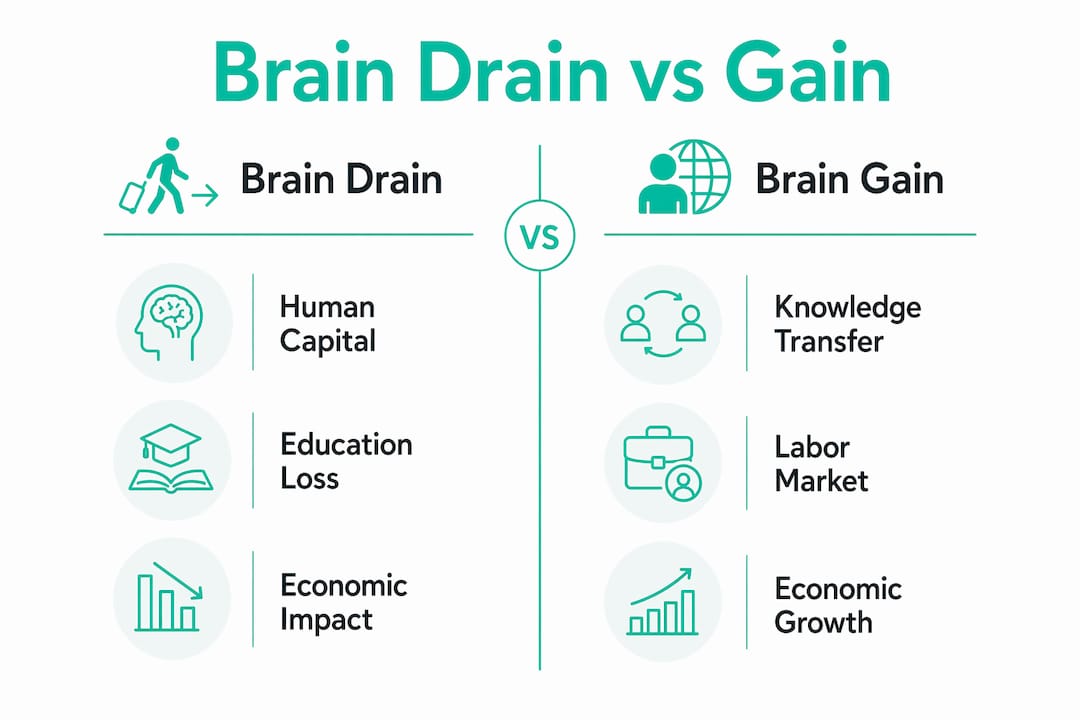
The brain gain framework, not brain drain, now dominates serious academic discourse on skilled migration. Brain gain effects from Dean Yang's 2026 review show that migration opportunities actively incentivize educational investment in origin countries, producing a net increase in human capital rather than a net loss. This overturns decades of policy assumptions that treated emigration of skilled workers as a straightforward loss for sending nations.
The economic data reinforces this shift. International labor migration produces 4 to 5-fold wage increases for migrant workers, which stimulates savings, remittances, and educational investment back home. That wage differential is not just a personal gain. It creates a feedback loop where families in origin countries invest more in education because migration is a credible, high-return option.

CEPR's 2026 research adds another layer. Labor market complementarities between immigrant and native workers mean that immigrant scholars do not compete with domestic researchers. They fill distinct roles, address specific gaps, and amplify the productivity of native colleagues. Standard economic models have consistently underestimated this complementarity, which is why pre-2020 policy debates often framed immigration as a zero-sum competition for academic positions.
The knowledge transfer dimension is equally significant. Immigrant scholars carry methodological approaches, datasets, and professional networks across borders. They create trade linkages, shift social norms within institutions, and introduce research questions that domestic scholars had not prioritized. A STEM department that recruits internationally does not just add headcount. It adds intellectual infrastructure.
| Outcome | Brain drain narrative | Brain gain evidence |
|---|---|---|
| Human capital in origin country | Depleted by emigration | Grows through educational investment incentives |
| Host country labor market | Crowded out by immigrants | Complemented by immigrant-native skill pairing |
| Knowledge flow | One-directional loss | Bidirectional transfer via networks and remittances |
| Economic impact | Negative for sending nations | Positive wage and productivity effects documented |
Pro Tip: Recent studies from 2025 and 2026 correct a persistent error in older immigration research. If your literature review relies on pre-2015 brain drain studies, the conclusions are likely outdated and should be reexamined against current evidence.
How do immigration policies shape scholarly participation?
Immigration policy does not operate in the background. It directly determines whether immigrant scholars can enter, stay, and contribute visibly to academic and STEM institutions. The structure of enforcement, visa categories, and parole programs each produce distinct effects on scholarly output and researcher mobility.
Intensified enforcement creates a specific and underappreciated problem. A 2025 PNAS study on childcare workforce dynamics found that ICE enforcement activity shifts foreign-born workers from regulated, visible employment into informal, private household roles rather than causing them to leave the country. The same mechanism applies in academic and STEM contexts. Researchers facing enforcement pressure do not necessarily exit the field. They become less visible, less likely to publish under their real names, and less likely to engage with institutional structures. The scholarly contribution does not disappear. It goes underground, and the field loses the ability to build on it.
The CHNV humanitarian parole program offers a contrasting case. With over 530,000 migrants paroled between 2022 and 2024, the program demonstrated that structured legal pathways can facilitate documented, trackable migration flows. For scholarly migration specifically, documented status is not just a legal formality. It determines whether a researcher can accept a university position, apply for federal grants, or co-author with U.S.-based colleagues.
Visa categories matter enormously at the individual level. The EB-1A extraordinary ability visa and the EB-2 National Interest Waiver are the two primary legal instruments for immigrant scholars in the United States. Both recognize that certain researchers contribute value that exceeds what standard labor market tests can measure. Hasan Legal PC specializes in building the evidentiary records these petitions require, including tailored recommendation letters and citation analyses that document scholarly impact. You can review STEM immigration pathways in detail to understand how EB-1A through EB-3 categories apply to different researcher profiles.
| Policy type | Effect on scholarly contributions |
|---|---|
| Intensified enforcement | Shifts researchers to informal roles, reduces visible output |
| Humanitarian parole programs | Expands documented access, enables formal academic participation |
| EB-1A extraordinary ability visa | Directly supports top-tier immigrant scholars with self-petition option |
| EB-2 National Interest Waiver | Enables STEM researchers to bypass labor certification with national benefit argument |
| H-1B wage-based selection | Affects mid-career researchers; recent changes detailed in H-1B selection analysis |
Pro Tip: If you are advising a foreign-born researcher on U.S. immigration options, the EB-2 NIW is frequently overlooked in favor of employer-sponsored routes. For scholars with a strong publication record, the self-petition route is often faster and more stable.
What misconceptions distort understanding of immigrant scholarly contributions?
The most persistent misconception is that brain drain and brain gain are mutually exclusive outcomes. They are not. A single migration event can simultaneously reduce a specific skill in one region while generating educational investment, remittances, and eventual return migration that rebuilds that skill base over time. Treating these as binary outcomes produces bad policy.
A second misconception is that immigrant scholars integrate automatically once they arrive. Mutual willingness integration research shows that scholarly contributions depend on engagement from both the immigrant researcher and the host institution. When either side withdraws, the system produces far less than its potential. A university that hires an immigrant scholar but provides no mentorship, no network access, and no path to tenure is not actually leveraging that scholar's potential. It is extracting short-term labor.
Public attitudes add another layer of complexity. A 2026 analysis in Comparative European Politics found that altruistic and libertarian predispositions produce stable pro-immigration views, while egoistic and authoritarian predispositions create volatile, context-dependent support. This matters for academic institutions because departmental culture shapes whether immigrant scholars feel safe publishing on politically sensitive topics, applying for leadership roles, or advocating for policy changes.
Segregation effects further complicate the picture. A Political Behavior study found that increased segregation can actually moderate anti-immigrant attitudes among conservative groups by reducing the salience of intergroup conflict. This counterintuitive finding suggests that geographic and institutional context shapes how immigrant scholars are received, independent of their actual output.
Common misconceptions and the evidence that corrects them:
- Misconception: Brain drain permanently harms origin countries. Reality: Migration incentivizes educational investment, often producing net human capital gains over time.
- Misconception: Immigrant scholars compete with native researchers. Reality: CEPR research confirms complementarity, not competition, in most academic labor markets.
- Misconception: Legal status does not affect research output. Reality: Enforcement-driven shifts to informal roles reduce visible scholarly contributions measurably.
- Misconception: Integration is the immigrant's responsibility alone. Reality: Mutual willingness models show host society engagement is equally determinative of scholarly productivity.
Pro Tip: When designing institutional support programs for immigrant researchers, focus equally on structural reception conditions as on individual researcher capacity. The research is clear that both sides of the equation determine outcomes.
How can academics and policymakers apply this research?
Applying the academic insights from immigration research requires moving from descriptive findings to structural changes in both policy and institutional practice. The evidence base now supports specific, testable recommendations.
-
Adopt brain gain metrics in immigration policy evaluation. Policymakers should measure not just the number of immigrant scholars admitted but the downstream effects on origin country educational investment, U.S. research output, and cross-border collaboration. Dean Yang's framework provides a workable template for this kind of multi-country impact assessment.
-
Expand and protect documented pathways for STEM researchers. The CHNV program's outcomes show that structured legal access produces trackable, manageable migration flows. Applying similar logic to academic migration means strengthening EB-1A and EB-2 NIW processing times and reducing administrative backlogs that delay researcher entry. You can review employment-based adjustment processes to understand where delays typically occur.
-
Build mutual willingness into institutional hiring frameworks. Universities and research institutions should evaluate their own structural openness, not just candidate qualifications. This means mentorship programs, transparent promotion criteria, and active inclusion of immigrant scholars in departmental governance.
-
Monitor enforcement effects on research sector visibility. The PNAS childcare workforce data offers a methodology that academic labor economists should replicate for STEM and education sectors. If enforcement is pushing researchers into informal roles, the field needs to know. Institutions can advocate for enforcement policies that distinguish between labor sectors with different public interest implications.
-
Use legal frameworks proactively, not reactively. Immigrant scholars and their institutions often engage immigration attorneys only when a problem arises. The extraordinary ability immigration framework rewards researchers who build their evidentiary record over time, not at the last minute. Institutions that embed legal strategy into faculty recruitment gain a measurable advantage in retaining top international talent.
-
Engage with public attitude research when communicating immigration's value. The 2026 Comparative European Politics findings on political psychology suggest that framing matters. Arguments grounded in national interest and complementarity tend to resonate more broadly than purely humanitarian frames when addressing skeptical audiences.
My perspective on policy, scholarship, and what the research actually demands
What strikes me most about the current state of immigration and scholarly contribution research is how far the evidence has moved while the policy conversation has stayed largely in place. I have worked with immigrant researchers across STEM and education fields for years, and the pattern is consistent. The scholars who contribute most are not the ones who simply arrived with credentials. They are the ones whose institutions met them halfway.
The mutual willingness model is not just an academic construct. I see it play out in every EB-1A case I handle. A researcher with 40 citations and three patents can still struggle to demonstrate "extraordinary ability" if their institution never gave them the platform to make that work visible. The legal record reflects the institutional environment as much as the individual's talent.
Since 2023, enforcement shifts have created a specific chilling effect that I do not think is fully captured in the published research yet. Researchers on pending status are making career decisions based on enforcement risk, not merit. That is a direct cost to U.S. scientific output that does not show up in any current productivity metric.
The brain gain framework is correct, but it is not automatic. It requires deliberate policy design, institutional commitment, and legal infrastructure that actually works for the researchers it is supposed to serve. The evidence is there. The question is whether institutions and policymakers are willing to act on it.
— Mahmudul
How Hasan Legal PC supports immigrant scholars in the U.S.
Hasan Legal PC works directly with immigrant researchers, academics, and STEM professionals to build the legal cases that match their scholarly records. Attorney Mahmudul Hasan, Esq. personally oversees every case, from EB-1A extraordinary ability petitions to EB-2 National Interest Waivers and humanitarian parole applications.

If you are a researcher evaluating your U.S. immigration options, or an institution looking to retain international faculty, the right legal strategy makes a measurable difference. Hasan Legal PC offers personalized case evaluations and crafts recommendation letters and petitions grounded in your actual scholarly impact. Explore the full range of immigration services or request a free case evaluation to understand which pathway fits your profile and timeline.
FAQ
What does "scholarly contributions immigration explained" mean?
Scholarly contributions immigration explained refers to the documented academic, scientific, and intellectual output that immigrant researchers produce within host countries. It covers knowledge transfer, research publications, STEM innovation, and the broader human capital effects of skilled migration.
Does immigration cause brain drain in origin countries?
Current research, including Dean Yang's 2026 review, shows that migration opportunities typically stimulate educational investment in origin countries, producing brain gain rather than a simple loss of talent. The outcome depends on policy design and the scale of return migration and remittances.
How do immigration enforcement policies affect STEM researchers?
A 2025 PNAS study found that intensified enforcement shifts foreign-born workers from formal to informal roles rather than causing exit. In STEM and academic contexts, this reduces the visibility of scholarly output and limits researchers' ability to publish, collaborate, and access federal funding.
What visa categories best support immigrant scholars in the United States?
The EB-1A extraordinary ability visa and the EB-2 National Interest Waiver are the primary pathways for immigrant scholars. Both allow self-petition without employer sponsorship, making them well-suited for researchers with strong publication records and documented impact in their fields.
Why does mutual willingness matter for immigrant scholarly productivity?
Research on dynamic integration models shows that scholarly contributions depend on engagement from both the immigrant researcher and the host institution. When institutions fail to provide structural support, even highly qualified immigrant scholars produce less visible and less impactful work than their credentials would predict.
Key takeaways
Immigrant scholars generate measurable brain gain, not brain drain, but only when immigration policy and institutional structures actively support their formal participation and visibility.
| Point | Details |
|---|---|
| Brain gain is evidence-based | Dean Yang's 2026 review confirms migration incentivizes educational investment, producing net human capital growth in origin countries. |
| Policy structure determines visibility | Enforcement-driven shifts push researchers into informal roles, reducing published output and institutional engagement. |
| Complementarity, not competition | CEPR research shows immigrant and native scholars fill distinct roles, amplifying each other's productivity rather than competing. |
| Mutual willingness drives output | Host institution engagement is as determinative of scholarly productivity as the immigrant researcher's own qualifications. |
| Legal pathways require proactive strategy | EB-1A and EB-2 NIW petitions reward researchers who build evidentiary records over time, not at the point of crisis. |
Recommended
- Immigrant Pathways for STEM Employment: EB-1A through EB-3, PERM, and the Priority Date Landscape | Hasan Legal PC
- STEM Employment Pathways: Temporary and Permanent Options at a Glance | Hasan Legal PC
- Nonimmigrant Pathways for STEM Employment in the United States | Hasan Legal PC
- Why U.S. Companies Should Rethink Talent Strategy Through Extraordinary Ability Immigration | Hasan Legal PC