

The immigration record request process is the official procedure by which individuals in the United States can access their personal immigration history files through the USCIS Freedom of Information Act (FOIA) system. Formally called a FOIA or Privacy Act request, this process gives you legal access to your Alien File (A-File), which documents every interaction you have had with U.S. immigration authorities. Whether you need records for a green card application, a court case, or personal review, knowing how to request immigration records correctly saves you weeks of delays. This guide walks you through every step, from gathering documents to downloading your file.
What is the immigration record request process?
The immigration record request process is the formal method USCIS uses to fulfill requests under the Freedom of Information Act and the Privacy Act of 1974. These two laws give you the right to access records the federal government holds about you. For immigration purposes, the most requested document is the A-File, a complete record of your immigration history including visa applications, entry records, correspondence, and any enforcement actions.
As of january 22, 2026, all FOIA requests must be submitted exclusively online through the USCIS portal at first.uscis.gov. Paper submissions using the old Form G-639 are no longer accepted. This shift to a fully digital system means faster identity verification and fewer lost submissions compared to the former mail-based process.

You can request your own records, or you can request records on behalf of someone else with their written consent. Attorneys, family members, and legal representatives all use this same system. The key difference is that third-party requests require additional documentation to prove authorization.
What do you need before submitting your request?
Preparing correctly before you submit is the single biggest factor in avoiding delays. USCIS needs enough information to locate the correct file and verify your identity. Missing or inaccurate details cause rejections that reset your position in the processing queue.
Gather the following before you start:
- Full legal name of the Subject of Record, including all aliases and maiden names ever used on immigration documents
- Date of birth and country of birth for the subject
- Alien Registration Number (A-Number), if known, since this is the fastest way for USCIS to locate a file
- Government-issued photo ID, such as a passport, state ID, or driver's license
- Any DHS or USCIS notices you have received, which can help confirm the correct file
- Your current residential mailing address, not a P.O. box or attorney's office address
That last point matters more than most people realize. Using only an attorney or mailing address causes USCIS to reject the request outright. You lose your place in line and must re-file from scratch.
For third-party requests, you also need written consent from the person whose records you are requesting. Consent must be provided through a sworn declaration submitted digitally, or a notarized affidavit if the situation requires it. The declaration must clearly state that the subject authorizes the release of their records to you.
Pro Tip: Collect all USCIS and DHS notices received in the past five years before starting your request. These documents contain A-Numbers, receipt numbers, and case details that make your request faster to process.
How do you submit a request through the USCIS FOIA portal?
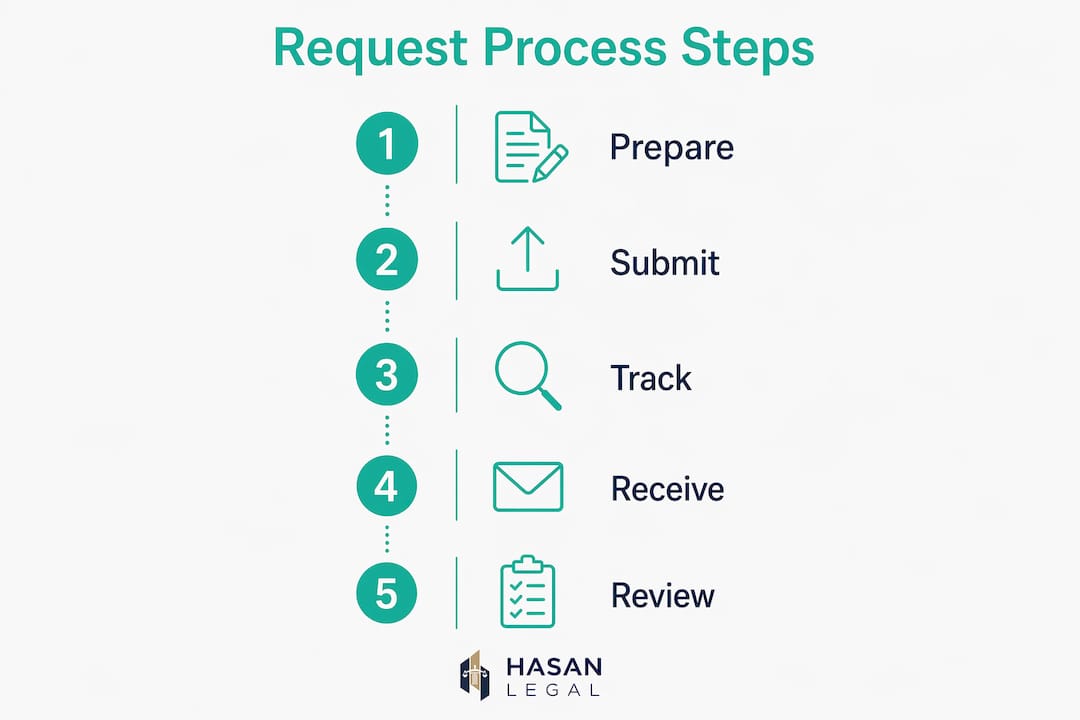
The USCIS online FOIA portal launched in 2026 integrates identity verification and consent declarations directly into the submission flow. This replaces the old paper process and reduces the chance of administrative errors. Here is how to complete your submission:
- Create a USCIS online account. Go to myaccount.uscis.gov and register with a valid email address. You will use this account to submit and track your request.
- Access the FOIA portal. Navigate to first.uscis.gov and log in with your USCIS account credentials.
- Select the type of request. Choose whether you want your entire A-File or specific documents within it. Requesting specific documents is almost always faster.
- Enter the Subject of Record's information. Fill in the full legal name, date of birth, A-Number, and any aliases. Accuracy here is critical.
- Upload your identity documents. Attach a clear scan or photo of your government-issued ID. The portal accepts standard image and PDF formats.
- Submit your consent declaration. If you are requesting records for someone else, complete the sworn declaration within the portal. For your own records, you attest to your identity digitally.
- Review and submit. Check every field before submitting. Errors at this stage cause delays.
- Save your FOIA control number. After submission, the system generates a unique control number. You need this number to track your request status online.
The portal also lets you specify whether you want records delivered digitally or by mail. Digital delivery is faster and eliminates the risk of documents being lost in transit.
Pro Tip: When filling out the portal, choose "specific documents" rather than "entire A-File" whenever possible. Targeted requests for specific forms reduce administrative review time significantly and get you usable records faster.
The following details help USCIS locate your file more quickly:
- Receipt numbers from past applications
- Visa category or type (for example, F-1, H-1B, or IR-1)
- Port of entry and approximate date of last entry
- Any prior removal or deportation proceedings
What should you expect after submitting?
Processing times vary based on the complexity of your request and USCIS's current workload. USCIS uses a three-track system to prioritize requests. Simple requests, such as those for a single document, process faster than complex ones involving full A-Files or records spanning many years.
Processing times can range from 39 days for simple requests to 89 days or more for complex requests. There is no fixed statutory deadline, so your wait depends on both the type of request and the volume of submissions USCIS is handling at the time.
You can check your request status at any time using your FOIA control number on the USCIS website. The status page shows whether your request is pending, in review, or ready for release. Hasan-legal recommends checking USCIS processing times regularly, since workload fluctuations affect all three tracks.
When your records are ready, expect the following:
- Redacted content. USCIS redacts sensitive information before releasing records. Personal data about third parties, law enforcement details, and certain enforcement records are commonly removed. The file you receive may look incomplete compared to the original.
- Digital or physical delivery. If you chose digital delivery, you will receive a download link via your USCIS account. Physical copies arrive by mail at the residential address you provided.
- Pagination and indexing. Large A-Files often arrive with numbered pages and a document index. Review the index first to locate the specific records you need.
If your request is denied or records are withheld, USCIS will send a written explanation citing the specific legal exemption. You have the right to appeal that decision through USCIS's administrative appeals process.
What are the most common mistakes in immigration record requests?
Small errors in your request can cost you months of waiting. The most frequent mistakes are avoidable with a few minutes of preparation.
Submitting a FOIA request is not the same as asking USCIS a question. FOIA requests must specifically ask for records, not inquiries or legal guidance related to pending immigration applications. Requests that ask questions or seek legal advice are denied outright.
The most common errors include:
- Using an attorney's address instead of your residential address. USCIS validates your identity against the address on file. An attorney's address triggers a rejection.
- Requesting the entire A-File when you only need one document. Full file requests take significantly longer. Request only what you actually need.
- Submitting a combined request for multiple people. USCIS requires a separate request for each individual. One submission per person is the rule.
- Failing to sign or notarize third-party declarations. Unsigned or improperly notarized consent documents result in automatic rejection.
- Treating FOIA as a case-advancement tool. FOIA does not accelerate or influence ongoing immigration cases or pending benefit applications. It retrieves documents only.
Pro Tip: Before submitting, read through your request as if you were a USCIS clerk seeing it for the first time. If any field is ambiguous or any document is missing, fix it before you hit submit. A rejected request loses its queue position entirely.
Key Takeaways
The most reliable way to obtain your immigration records is to submit a targeted, complete FOIA request through the USCIS online portal at first.uscis.gov, using your residential address and the correct consent documentation.
| Point | Details |
|---|---|
| Online submission is mandatory | As of january 22, 2026, all FOIA requests must be submitted at first.uscis.gov; paper Form G-639 is no longer accepted. |
| Prepare identity documents first | Gather your A-Number, government-issued ID, and all USCIS notices before starting the portal submission. |
| Request specific documents | Targeted requests process in as few as 39 days; full A-File requests can take 89 days or more. |
| Use your residential address | Providing an attorney's or mailing address causes rejection and resets your queue position. |
| FOIA retrieves records only | A FOIA request does not speed up pending cases or provide legal advice; it releases documents only. |
What I have learned about FOIA requests after years of immigration practice
Most people approach a FOIA request the wrong way. They treat it as a shortcut to move a stalled case forward, or they submit it hoping USCIS will answer a specific question about their application. Neither works. FOIA is solely an information retrieval mechanism. It does not affect adjudication, and it will not get your green card approved faster.
The clients who get the most value from FOIA requests are the ones who know exactly what they are looking for before they submit. If you need to verify a specific entry date, request the arrival record. If you need to confirm a prior visa approval, request that form. Vague requests for "everything" produce large, heavily redacted files that take months to arrive and are hard to use.
One thing practitioners consistently underestimate is the value of the records once you have them. An A-File can reveal discrepancies in your immigration history that you were not aware of. Catching those discrepancies before you file a new application is far better than having USCIS catch them during adjudication. That is the real reason to request your records, and it is worth doing well before you need them.
— Hasan Legal Desk
How Hasan-legal can help with your immigration documentation
Requesting immigration records is straightforward when everything goes right. When it does not, having an experienced attorney review your request before submission can prevent costly delays.
Hasan-legal assists clients across the United States with the full range of immigration documentation requests, from preparing FOIA submissions to reviewing records for discrepancies that could affect a pending application. Attorney Mahmudul Hasan, Esq., personally oversees every case, so you get direct legal guidance rather than a form letter. Whether you need help preparing a third-party consent declaration, interpreting redacted records, or connecting your file review to a broader green card strategy, Hasan-legal provides clear, personalized support. Schedule a consultation to get started.
FAQ
What replaced Form G-639 for immigration record requests?
As of january 22, 2026, USCIS replaced paper Form G-639 with a mandatory online submission system at first.uscis.gov. All FOIA and Privacy Act requests must now be submitted through that portal.
How long does it take to receive immigration records from USCIS?
Processing times range from approximately 39 days for simple requests to 89 days or more for complex ones. There is no fixed statutory deadline, so timelines depend on request type and USCIS workload.
Can I request immigration records on behalf of a family member?
Yes. Third-party requests require written consent from the subject, submitted as a sworn declaration through the USCIS online portal or as a notarized affidavit when required.
Will my immigration records show everything USCIS has on file?
Not necessarily. USCIS redacts personal data about third parties, law enforcement details, and other sensitive information before releasing records, so the file you receive may be incomplete compared to the original.
Does submitting a FOIA request help speed up a pending immigration case?
No. A FOIA request is a document retrieval tool only. It does not influence adjudication, advance pending applications, or serve as a channel for legal questions directed at USCIS.